

In December 2025, Instagram began gradually rolling out a five-hashtag limit for posts and Reels, down from 30. For anyone who remembers stuffing captions with every tag they could think of, that’s a clear signal the rules have changed. Some marketers now say hashtags are dead. Others still swear by them.
So, are hashtags still relevant?
At Splice, we think the answer is yes, but their role has changed. Hashtags can still help categorise content and support discovery, but they can’t rescue weak content or guarantee your posts reach more people.
The hashtag rules have changed
There was a time in the not-too-distant past when adding 20 or 30 hashtags to an Instagram caption was standard practice. More hashtags were assumed to mean more opportunities to be discovered, so why not use as many as possible?
Social media platforms have now become considerably better at understanding content without a hashtag. The Instagram algorithm in 2026 considers post content, captions and audience behaviour alongside hashtags. LinkedIn is doing something similar, announcing an advanced AI-powered ranking system in March 2026, designed to better understand posts and match them with users’ professional interests.
Facebook has also introduced more AI-driven personalisation.
The implication for your social media strategy? What you publish, who it’s relevant to and how people respond now matter far more than how many hashtags you attach.
How many hashtags should you use in 2026?
There’s no universal magic number. Each platform has different rules, and the recommendations continue to evolve.
Instagram: Up to 5 hashtags
In December 2025, Instagram reduced its hashtag limit from 30 to 5 per post or Reel. Instagram hashtags remain useful for identifying topics, but the platform’s leadership has made it clear that adding more doesn’t automatically increase reach.
We recommend using 3-5 relevant hashtags – fewer where appropriate.
For a podiatry clinic discussing diabetic foot assessments, #DiabeticFootCare communicates considerably more about the content than a generic hashtag like #Health or #Wellness.
Facebook:0-2 hashtags
Honestly, hashtags are optional for most Facebook posts, although they can still serve a purpose for awareness campaigns, community events and branded initiatives. A dental practice supporting Dental Health Week, for example, might use the campaign’s official hashtag. A post announcing new opening hours doesn’t need one.
The Facebook algorithm increasingly prioritises relevance and user behaviour. Don’t add hashtags simply because your content calendar template has space for them. Meta has warned against excessive hashtag use, identifying it as one characteristic of potentially spam-like content that may receive reduced distribution.
LinkedIn: 3-5 relevant hashtags
LinkedIn’s official guidance still suggests 3-5 top-of-mind hashtags for company posts.
And there’s evidence they may retain value. Metricool’s June 2026 study analysed 673,658 LinkedIn posts and found that posts containing at least one hashtag received 85% more impressions than the platform average. It’s an interesting correlation, although content quality, audience size and other factors also influence performance.
For healthcare organisations targeting clinicians, procurement teams or industry decision-makers, relevant LinkedIn hashtags can still support topic discovery.
TikTok: 3-5 relevant hashtags
There’s no universal optimal number, though 3-5 is a good starting point. Prioritise searchable topics and keywords that accurately describe the video rather than filling the caption with trending tags. A women’s health physiotherapist sharing pelvic floor tips, for example, is better served by #PelvicFloorHealth and a descriptive caption than #fyp or #viral.
Social SEO is doing more of the heavy lifting
Social media posts increasingly function as search engines – and content from public pages also now appears in Google searches.
Consider someone searching Instagram for information about hearing loss.
They might search #HearingLoss. But they’re also likely to type a question such as ‘What are the early signs of hearing loss?’
That changes the approach to content creation. Natural-language keywords, descriptive captions, video text and clear topics help platforms understand what a post offers.
This is where social SEO becomes an important part of content planning. Useful educational content also helps healthcare businesses establish credibility with people who may not yet know which provider or service they need.
Hashtags support that content. They shouldn’t determine it.
Branded hashtags and banned hashtags: What matters?
Branded hashtags still have a place, particularly for conferences, awareness campaigns and community initiatives. They provide a recognisable way to group related posts.
But using #YourBusinessName on every post won’t necessarily attract new audiences.
Some tags can become restricted or unsearchable because of content associated with them. Instagram doesn’t publish a definitive, permanent list of banned hashtags so check unfamiliar hashtags before publishing rather than relying on outdated lists circulating online.
Hashtags must be compliant
In healthcare advertising, hashtags can imply claims about treatments or medicines, even when those claims aren’t made in the caption.
The TGA’s social media advertising guidance warns that:
- Using a disease-related hashtag alongside a medicine advertisement may imply the medicine treats that condition, potentially creating an unauthorised therapeutic claim.
- Hashtags referencing prescription medicines, including brand names, abbreviations or slang, may be considered unlawful advertising to the public.
Our advice? Use relevant, factual hashtags that accurately reflect the content. Avoid hashtags that imply unapproved therapeutic benefits, promote prescription medicines or make claims you cannot substantiate.
Review hashtags with the same level of scrutiny you give the rest of your social media posts. Compliance requirements apply to them too.
So, do hashtags still work? They can. But we wouldn’t recommend building a social media strategy around them.
Instead, we recommend you:
- Start with the audience and content – Understand who you’re trying to reach and what information they’re looking for
- Follow platform-specific guidelines – Instagram allows a maximum of five hashtags, but there’s no need to reach the limit if fewer are relevant
- Prioritise relevance over popularity – Choose hashtags that accurately reflect the topic, service, industry or location rather than defaulting to broad, trending hashtags
- Avoid copying the same hashtags across every post – Select tags that reflect the individual piece of content. Use branded hashtags where they serve a clear campaign or community purpose
- Optimise your content for search – Include relevant keywords naturally in captions and on-screen text. Don’t rely on hashtags alone for discoverability
Put hashtags in the caption – There’s no compelling evidence that moving them to the first comment improves reach - Check for restrictions and compliance – Review hashtags before publishing. For healthcare advertising, avoid tags that imply unsubstantiated therapeutic claims or unlawfully promote prescription medicines
- Test whether hashtags are contributing to performance:
- Compare similar posts using no hashtags, one or two targeted hashtags and the platform’s recommended quantity
- Review non-follower reach, engagement, website visits and enquiries
- Account for differences in creative, timing and subject matter when interpreting results.
Build a social media presence that supports growth
Hashtags are a small part of a much bigger marketing challenge. As a healthcare-focused social media marketing agency, Splice develops strategies grounded in audience behaviour, platform best practice and the requirements of regulated healthcare advertising.
Our social media marketing services and content marketing services help healthcare businesses produce relevant content, build trust and connect marketing activity with business objectives.
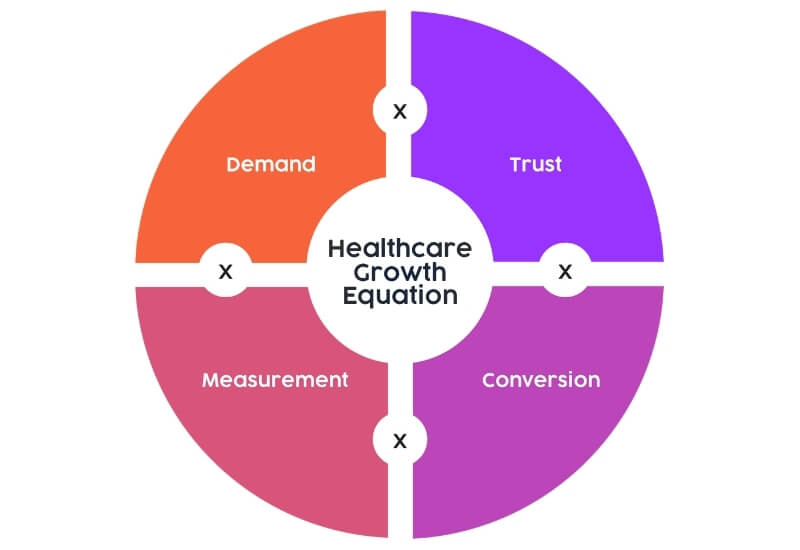
At Splice, we assess every channel through our Healthcare Growth Equation. Hashtags can support Demand by helping the right people find your content, and accurate, compliant hashtags protect Trust. But they do nothing for Conversion – a clear profile, a strong call to action and an easy path to book or enquire are what turn discovery into patients. And without Measurement, you won’t know whether any of it is working. Because the variables multiply, a weak link in any one of them limits the whole system.
Find the leak in your healthcare growth system: Complete the Healthcare Growth Scorecard
A hashtag might support discovery. But sustainable growth depends on what happens after someone discovers your content.
Want to know whether your current approach is working? Book your strategy session with Splice and let’s find where your next growth opportunity lies.
Frequently asked questions about hashtags in 2026
How has AI changed hashtags?
AI-powered algorithms can now interpret captions, images, videos and user behaviour to understand what content is about. Hashtags provide additional context, but platforms no longer depend on them to categorise posts or recommend content.
Clear messaging and searchable content are increasingly important.
Should hashtags go in the caption or first comment?
We recommend placing hashtags at the end of your caption. Instagram has previously advised including relevant keywords and hashtags in captions to support search visibility. There’s no compelling evidence that moving them to the first comment improves reach.
Can people still follow hashtags?
Instagram removed hashtag-following functionality in late 2024, while LinkedIn has also phased out its dedicated hashtag-following features. Hashtags remain searchable, but users can no longer rely on following them to receive related content in their feeds.
Are niche hashtags better than popular hashtags?
Not necessarily for reach, but niche hashtags often provide more useful context. A physiotherapy clinic posting about workplace injuries, for example, may find #WorkplaceInjury more relevant than #Health.
Choose hashtags based on the subject and intended audience, not simply their popularity.
Should businesses use the same hashtags on every post?
A fixed set of hashtags rarely reflects the variety of topics a business publishes. Maintain a hashtag library organised by services, industry topics, locations and campaigns, then select relevant tags for each post. Branded hashtags can be repeated where they serve a genuine campaign purpose.
Do hashtags help algorithms reach the right audience?
Hashtags can signal what a post is about, but they don’t tell an algorithm exactly who should see it. Platforms also consider content relevance, engagement, viewing behaviour and previous interactions. A relevant hashtag won’t compensate for content that fails to interest its intended audience.
How can you tell whether your hashtags are working?
Most platforms provide limited reporting on individual hashtag performance. Test different approaches across comparable posts and monitor non-follower reach, profile visits, engagement and website traffic.
For healthcare businesses, enquiries and bookings matter more than hashtag-generated impressions alone. Consider hashtag performance within your broader social media strategy rather than treating it as a standalone success metric.