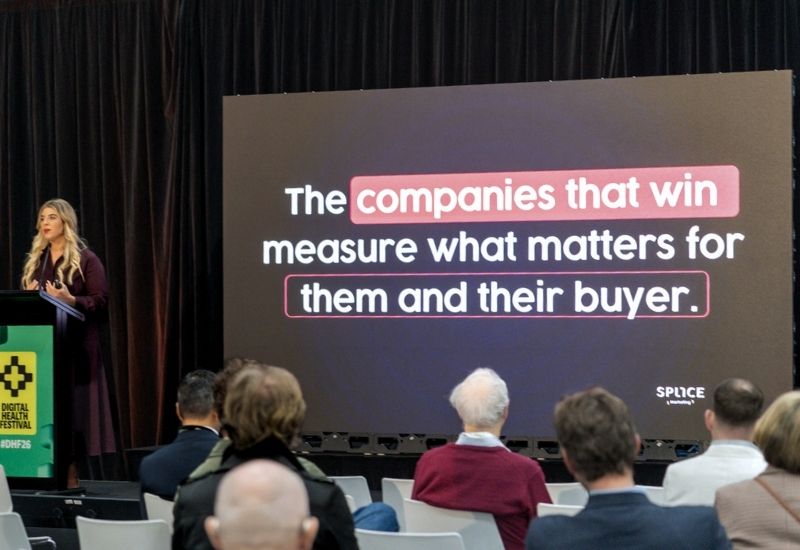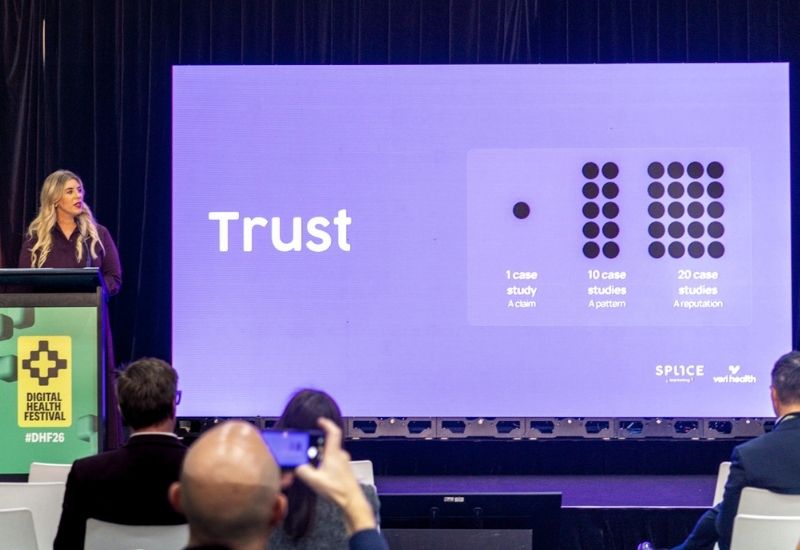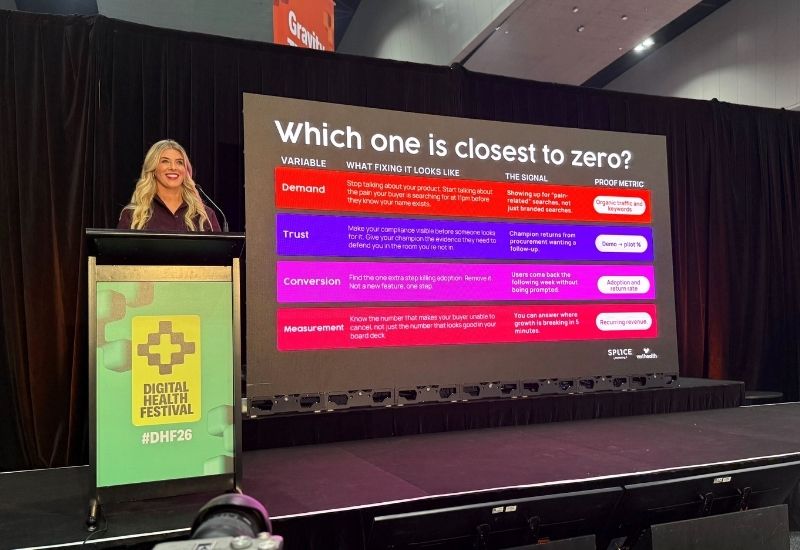


Of the four variables in the Healthcare Growth Equation (Growth = Demand × Trust × Conversion × Measurement), demand is the one almost everyone thinks they understand. It’s also the one most often misdiagnosed. So this is where the deep dives begin.
When a healthcare business tells me it has a demand problem, what they usually mean is “Not enough people know we exist.” So the instinct is to reach for more visibility. More ads. More boosted posts. Despite the increased noise and activity, the real problem sits untouched.
This article explores what demand really is, shows you how to identify if it is the variable holding back your business growth, and outlines how to fix it.
The TL;DR answer to demand
In healthcare growth, demand means there is a real market need for what you offer, and that the need is active enough for people to search, ask, compare or act.
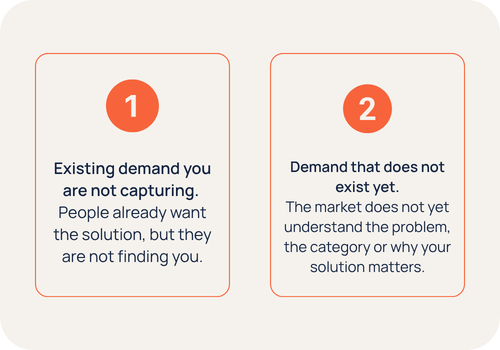
A demand problem usually falls into one of two categories:
Those two problems need completely different strategies.
Demand is alignment, not awareness
To truly address demand problems, you need to understand the distinction between demand and awareness.
Awareness is how many people know you exist. Demand is whether your offering matches a problem the market is actively feeling right now.
Those are not the same thing, and confusing them is expensive. You can be highly visible and still have weak demand, because being seen by people who don’t feel the problem you solve generates attention, not growth. Real demand lives at the intersection of your offer and an existing need.
For example, Australian GPs desperately need relief from administrative burdens. The RACGP’s 2024 Health of the Nation report found that 70% of GPs were concerned about administrative workload, which was the top reason many were planning to exit the profession in the next 5 years. This is a market in crisis, actively searching for relief. A business whose offer aligns with that exact pain doesn’t have to manufacture demand. It has to show up where the searching is already happening.
The same principle holds when your buyer is a patient rather than a clinician. Consider the anxiety-driven search someone undertakes at 3 am because they’re not yet ready to name their worrying symptoms to their doctor. Demand here doesn’t require shouting. It’s captured by being the most relevant, most findable answer at the precise moment of private need. That moment is where patient acquisition actually begins.
The two kinds of demand – and why the difference decides your strategy
Not all demand problems are the same, and the single most useful thing you can do is work out which kind you have.
1. Existing demand you are failing to capture
This is the more common problem, and usually the more fixable one. The market already feels the problem. People are already searching, comparing, asking friends, ChatGPT, and Google, checking local providers or weighing up options.
They just are not finding you.
In that case, the work is about capture. You need to appear at the point of intent with the right message, the right page, the right proof and the right next step. This is where SEO, Google Business Profile optimisation, service pages, local search, content clusters, paid search and clearer positioning can move the needle quickly.
2. Demand that does not exist yet
This is a very different job. Sometimes the market does not know it needs what you have built. Nobody knew they needed an AI scribe before they tried one. Nobody was searching for it at scale because they could not yet name the absence.
When this is the issue, you need a longer runway, because you have to create the demand before any other part of the equation can fire. This is category creation, and it’s a fundamentally different – and slower – kind of work.
You are not capturing demand. You are creating it. That means educating the market, naming the pain, building the category and helping buyers understand why the problem is worth solving now. It is slower, heavier work. It needs content, positioning, distribution, repetition and patience.
We’ve done exactly this kind of category-building for clients who wanted to own a space rather than compete inside it. The approach isn’t louder advertising; it’s flooding the relevant channels with genuinely useful education built around a specific need, so that as awareness of the problem grows, you are already established as the definitive answer.
It works. But it’s a multi-month campaign of content and positioning, not a quick win. Mistaking this kind of demand problem for the first kind is how well-funded businesses burn through their runway chasing a market that isn’t ready yet.
Knowing which kind you have is the whole game. Use demand-capture tactics when the market is not yet looking, and you will spend money being visible to people with no active intent. Use demand-creation tactics when the market is already searching, and you will over-explain to a market that already knows what it wants.
How to know if demand is your weakest pillar
Because the Healthcare Growth Equation multiplies, the goal is not to improve demand for its own sake but to know whether it is the variable closest to zero, and therefore your highest-leverage fix.
A few honest signals point to demand being the problem:
- People who reach you convert reasonably well, but there are not enough of them – that points up the funnel because interest, not friction, is the constraint.
- Your high-value services are not supported by enough service-led content, paid search or local visibility – so those who are looking never find you.
- You rely heavily on referrals or word of mouth, with no consistent top-of-funnel engine delivering new interest – a ceiling scaling healthcare businesses hit constantly, because referrals alone rarely keep pace with growing capacity.
- You have added more practitioners, more rooms, more locations – but enquiry volume has not kept up.
Equally, it’s worth ruling demand out before you spend money propping up the wrong pillar. We’ve sat with businesses convinced they had a demand problem who were actually drowning in an audience they couldn’t read.
We worked with a dermatology group convinced it needed more demand to meet its extended capacity. On paper, that sounded plausible. But the business already had a database of around 30,000 patients. The demand was there. The issue was that they could not confidently identify who wanted cosmetic treatments versus medical dermatology. That’s actually a measurement problem.
What fixing demand actually looks like
When demand genuinely is the constraint, the answer is methodical work to strengthen the foundations:
Get the keywords right first
You need to know how people describe the problem before you decide how to present the solution. That’s why service-intent keyword research is the foundation every other demand activity depends on. Get this wrong and every ad, every page, every campaign misses the people you’re trying to reach. This step is rarely exciting, but it is non-negotiable.
Win local search
Local search often happens when intent is already high. The patient is not casually browsing. They are looking for somewhere to go.
For most clinics, location-based SEO and a properly optimised Google Business Profile are among the fastest wins available. They turn a “near me” search into a booking, capturing patients at the exact moment of intent. It’s often the highest-return, lowest-effort fix on the board.
Map the customer journey
Before building anything, map how patients actually move from problem to booking across every channel. What do they search first? What do they compare? What do they need to believe before they enquire? Where do they get stuck?
Everything else – content, campaigns, funnels – should be built from that map, not guessed at.
Identify your high-value services
Not all demand is equal. Demand strategy has to be connected to the business model. You need to know which services drive real revenue, which have capacity, which align with your long-term plans. This lets you point your demand-generation at what actually matters to the business, rather than spreading effort evenly across everything.
Build content clusters around what people search
Demand capture lives or dies on being the answer. Clusters of genuinely useful content around the treatments and problems people search for are how you become findable and credible at the same time.
This is also where AI search is changing the shape of content. People are asking longer, more specific questions in a more conversational style. Content needs to answer the main question clearly, then support the reader with enough depth to earn trust.
Keep lifting your game
Demand should move with capacity, commercial goals and market maturity. The target should keep ratcheting as the business grows. The moment you treat demand as something you “have” rather than something you actively build, capture and measure, growth starts to flatten.
Demand makes you wanted – it doesn’t get you chosen
Here’s the honest limit of this variable, and the reason it’s only the first of four.
Demand makes you wanted. It does not get you chosen.
You can be the most findable, most relevant answer in your market and still lose the patient to friction at the booking page, or to a competitor who is simply trusted more. Demand opens the door. The other three variables decide whether anyone walks through it.
That’s exactly why diagnosing in the right order matters so much, and why doing this well is harder than it looks from the outside. Getting demand right means:
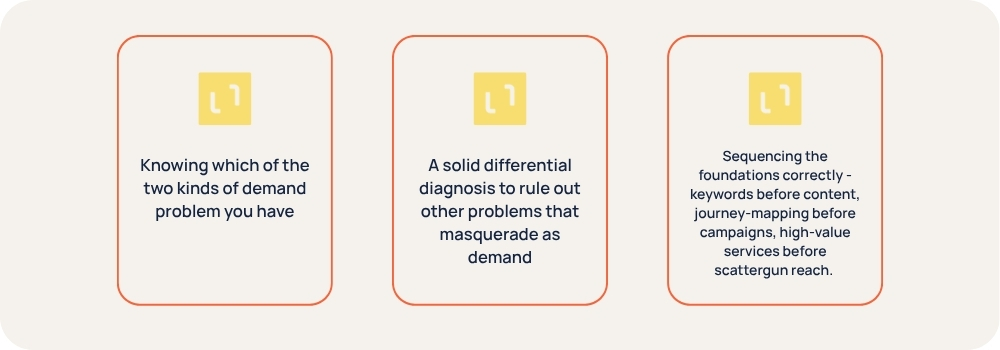
It’s a discipline, and one we run for healthcare businesses every day.
Growth plateaued? Do this next
Don’t try to address demand by shouting louder into the void. Instead, be honest about whether your offering addresses a genuine need and whether the fix is to capture demand that already exists or create demand that doesn’t yet. That single diagnostic question saves more wasted marketing spend than any campaign tweak ever will.
When growth plateaus, demand is often the first suspect but not always the true culprit. Sometimes another part of the growth equation is creating the pressure. The Splice Marketing team has those diagnostic conversations every day. Perhaps it’s time you called us?